
2021-2023
ReturnLogic, a SaaS B2B startup in returns management and post-purchase experiences, offers comprehensive solutions from a shopper returns center to a retailer platform equipped with powerful tools to manage warehouse and operations. Additionally, we provide data analytics to help retailers gain insights into returns and formulate strategies for reduction.
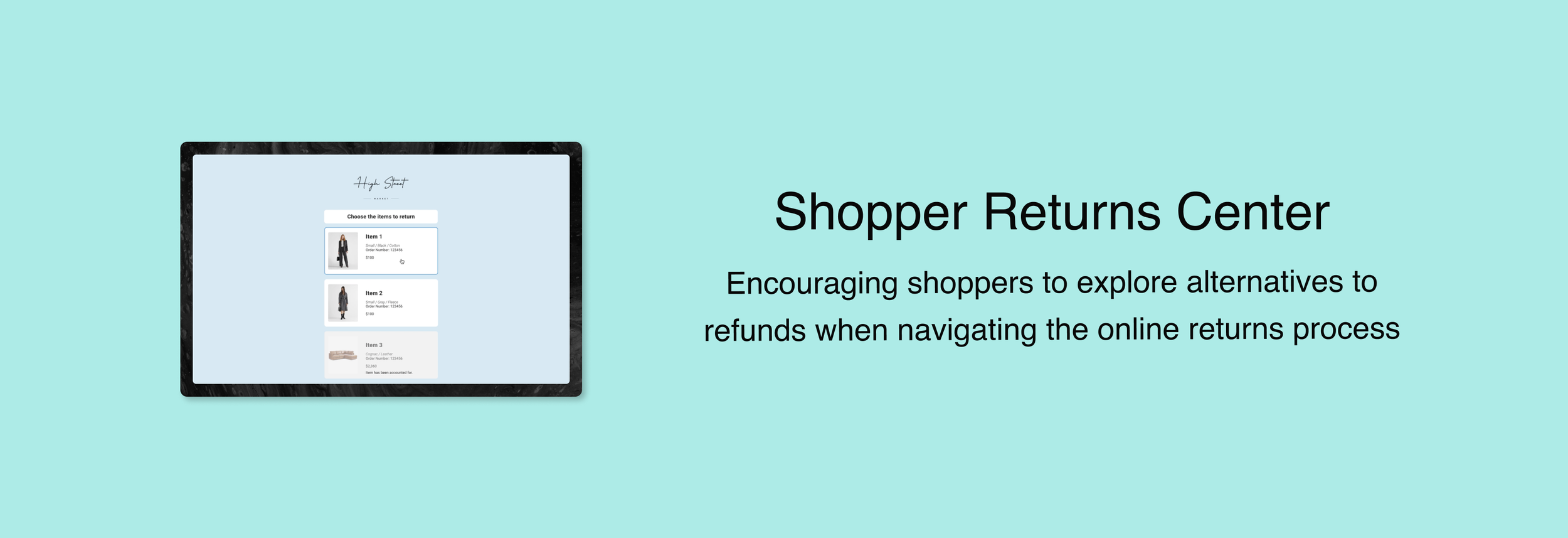
The Shopper Return Center
Our customers (e-commerce retailers) traditionally use ReturnLogic’s shopper return center as the home base for their shoppers to kickstart their returns journey. In the realm of online returns, key types include refund, exchange, store credit, and warranty.

The Common Customer Gripe
Customers are often frustrated that there are not efficient ways to discourage refunds during the return process. Survey responses and conversations with our Customer Success team revealed that:
Some of our retailers used creative tactics as workarounds on our platform to discourage refunds.
A handful of our customer churns were partially due to our product’s limited flexibility in discouraging refunds.
Churned customers end up exploring competitors who have solutions to deter refunds.
What Does Our Returns Data Say?
Before diving into customer research, I conducted an analysis of shopper returns data and trends to make sure that reducing refunds is a viable option. The data showed that:

These numbers suggest that the majority of return issues can be resolved without refunds – they are “preventable refunds”. Preference-based return issues, such as sizing, can be addressed through exchanges, or the like.
Initial Customer Conversations
Seeing the trends in customer feedback and data, we spoke to a handful of enthusiastic customers. We learned that:
Customers perceive refunds as lost sales because the money is returned directly back to the shopper. Refunds are considered the worst return type.
However, customers still want to offer refunds as a return option for shoppers because refunds are a post-purchase return expectation, and act as a pre-purchase safety net.
Looking Around
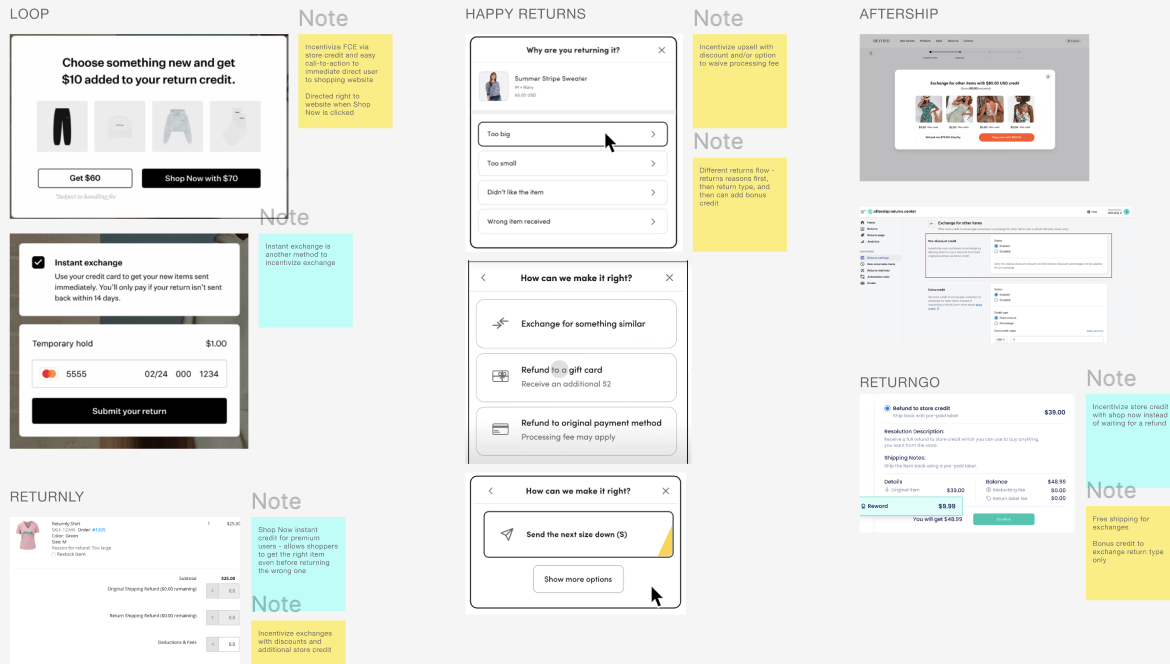
After preliminary interviews, I started by assessing other returns management tools to gauge the competitive landscape and existing solution space. The range of existing solutions ranged from instant exchanges to shopper credit to incentivize exchanges.
Exploring the Options
I spent some time ideating different approaches, keeping in mind the time constraints for the project. I created some quick wireframes to gauge customer feedback before moving to hi-fi.
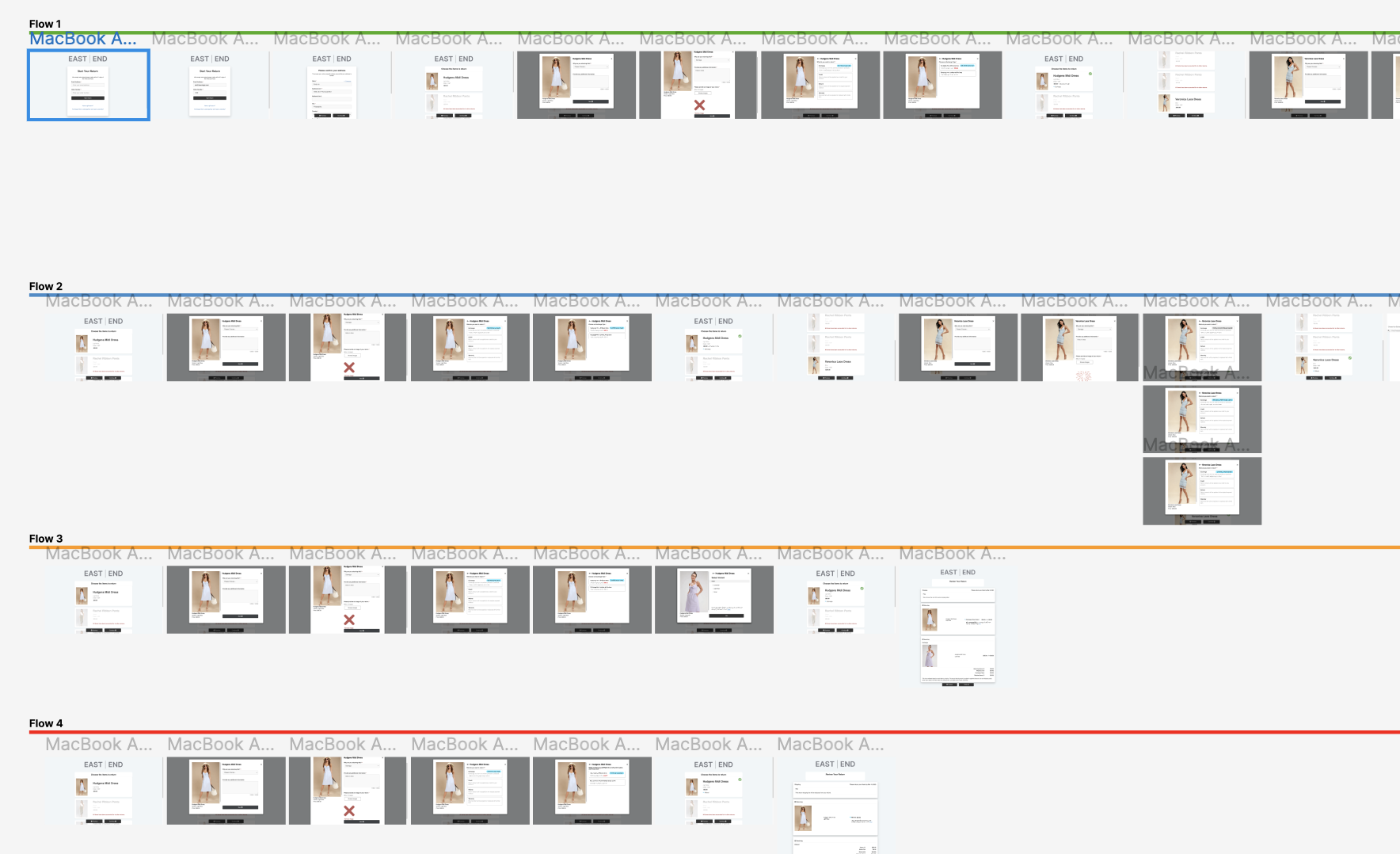
Through subsequent follow-up interviews with customers, it was clear that incentivizing exchanges with a fixed store credit was best path forward.
About 70% of the customers interviewed preferred having more exchanges as return types, even over shopper store credit.
Exchanges are an opportunity for upsell. If a shopper is returning a $20 item and exchanging it for a $30 item, they end up making an additional $10 from a return.
Following the Shopper’s Journey
I mapped out the shopper’s experience to illustrate their journey through an incentivized exchange versus a refund. This exercise demonstrated that the shopper returns center is the key touchpoint I should focus on to convert potential refunds to exchanges.
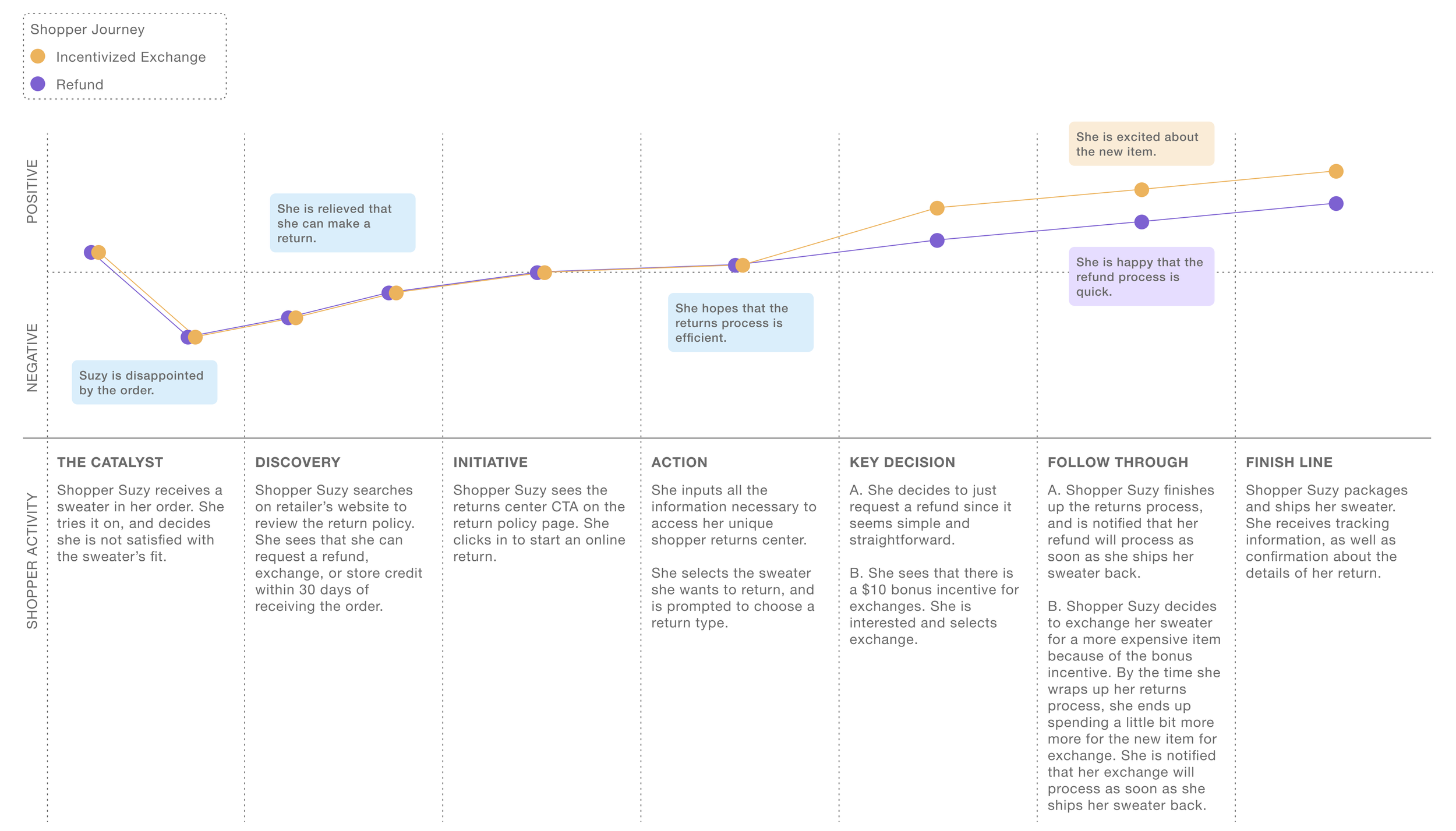
Rather than removing refunds as a strategy, encouraging shoppers to voluntarily opt for alternative return types (such as exchanges) maintains flexibility in the return process, and helps build shopper trust.
Figuring Out Incentivization Touchpoints
I looked at each step of the shopper’s journey through the returns center to assess where the important decision points are when influencing the return type they select.
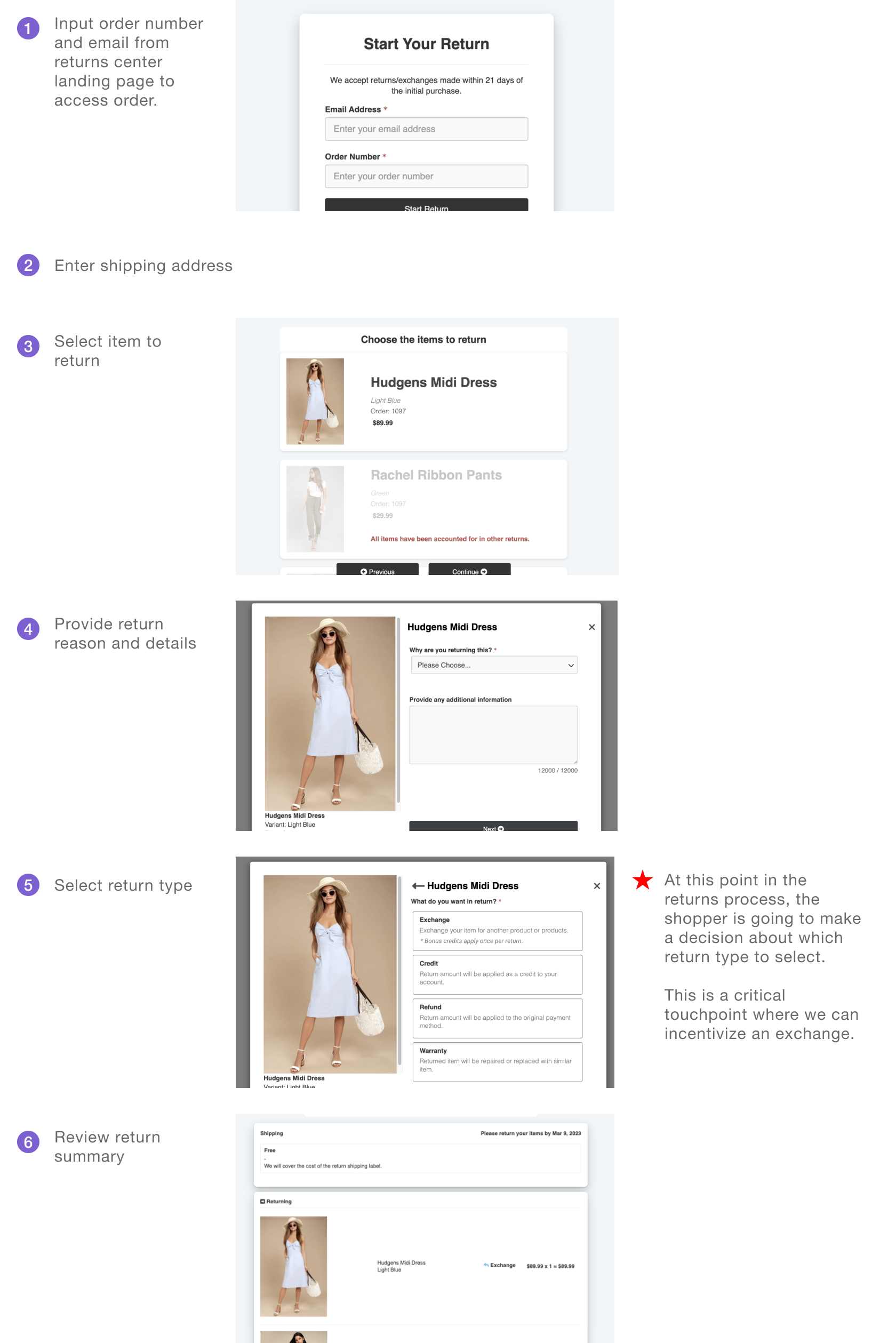
The return center is fairly straightforward, so the return type selection step is the most obvious touchpoint. Note: depending on the return type selected, there are some different screens that I did not show above.
The Makeover
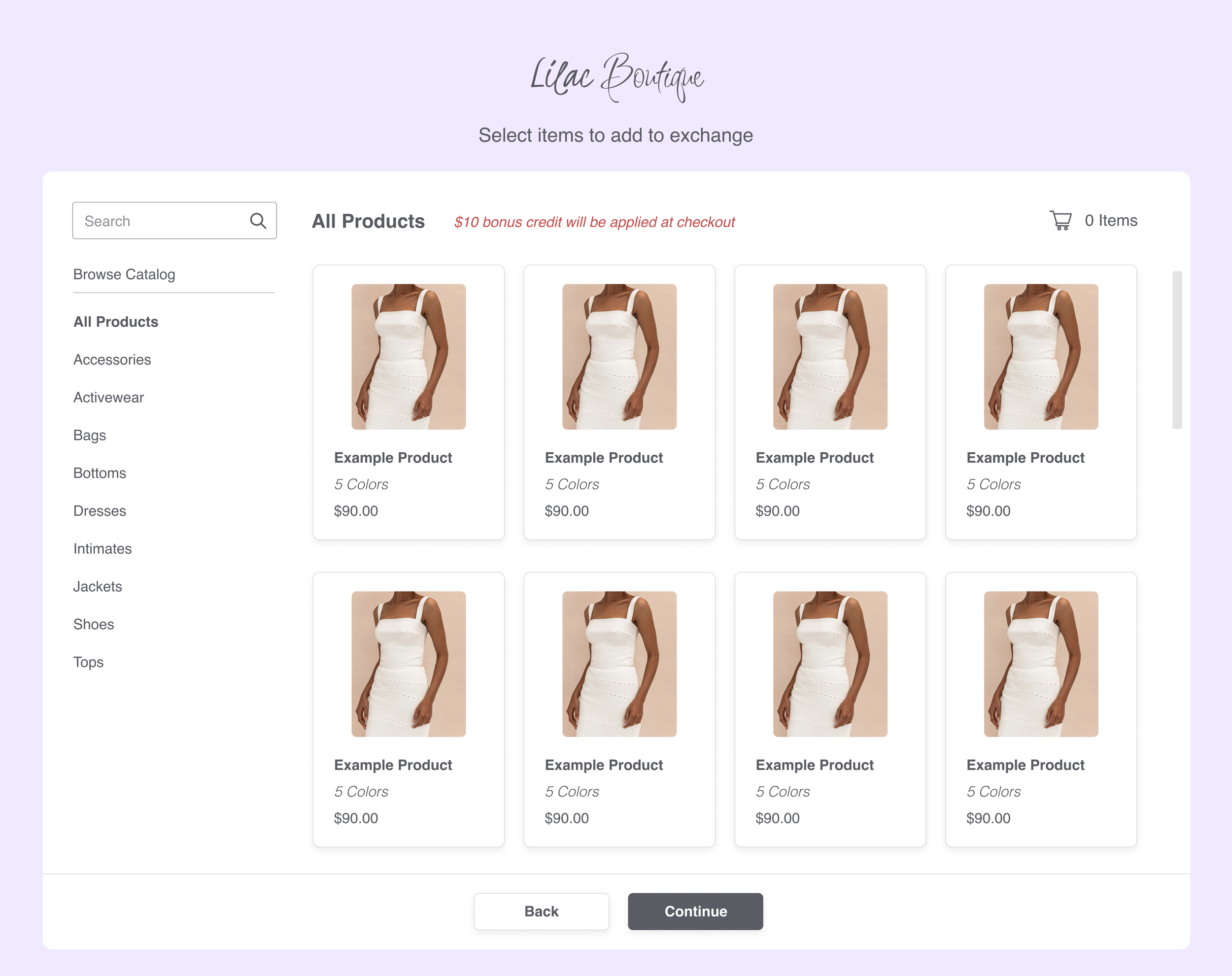
Without drastically changing the shopper’s workflow, I made design changes to the returns process at the return type selection touchpoints, and following UI updates. I modernized the visual design of each step in the returns process as well.
First, the shopper-facing portal –
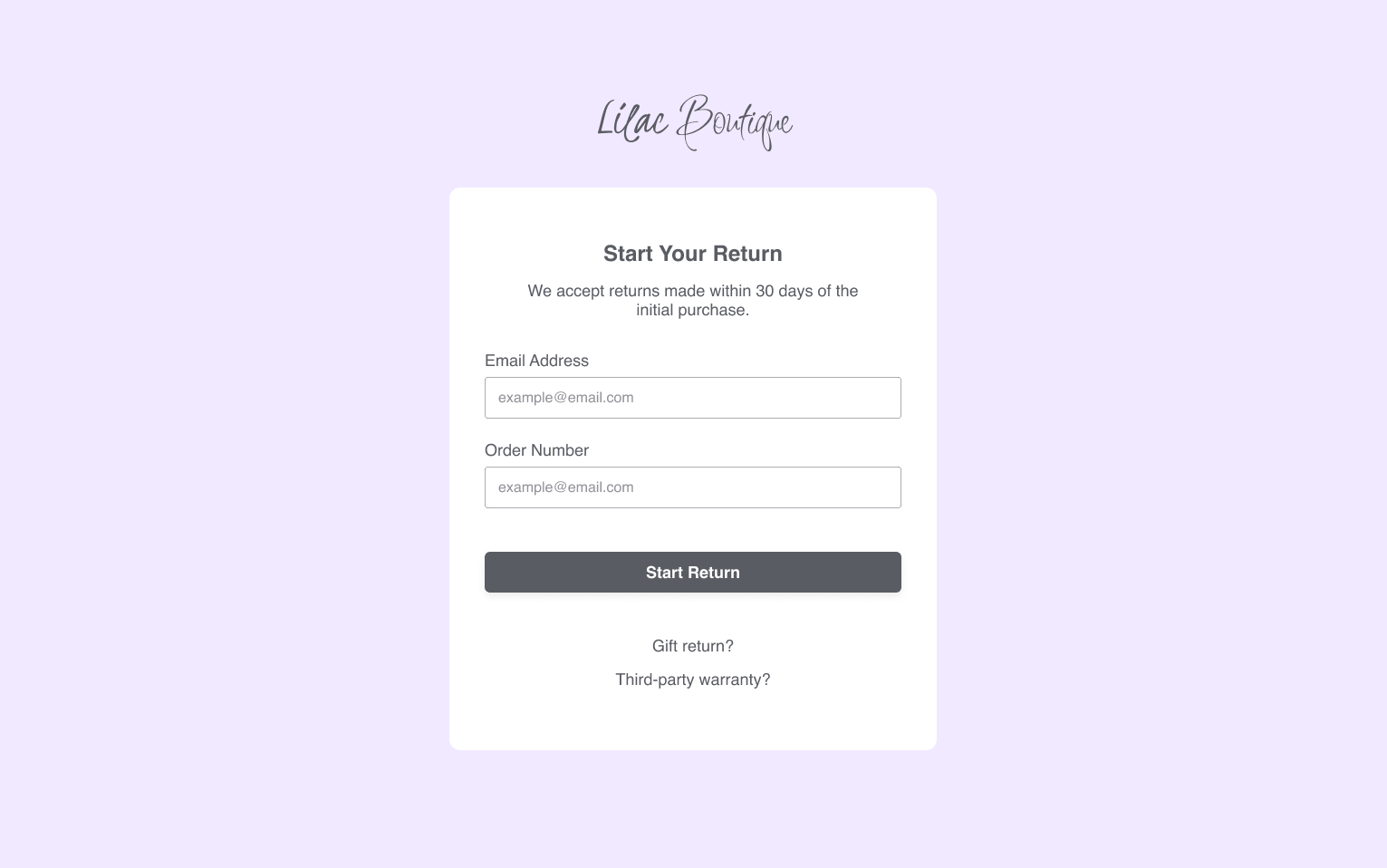
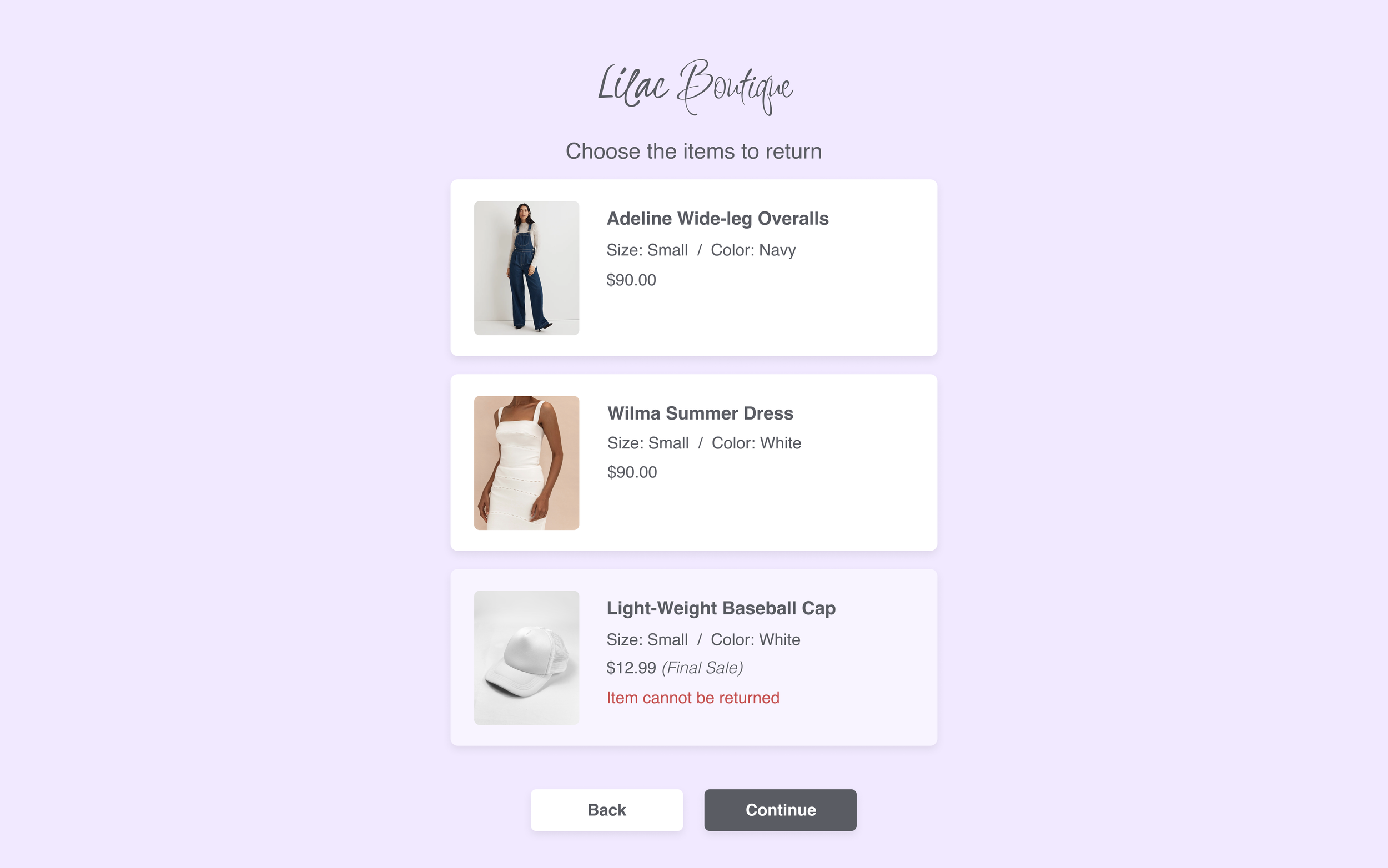

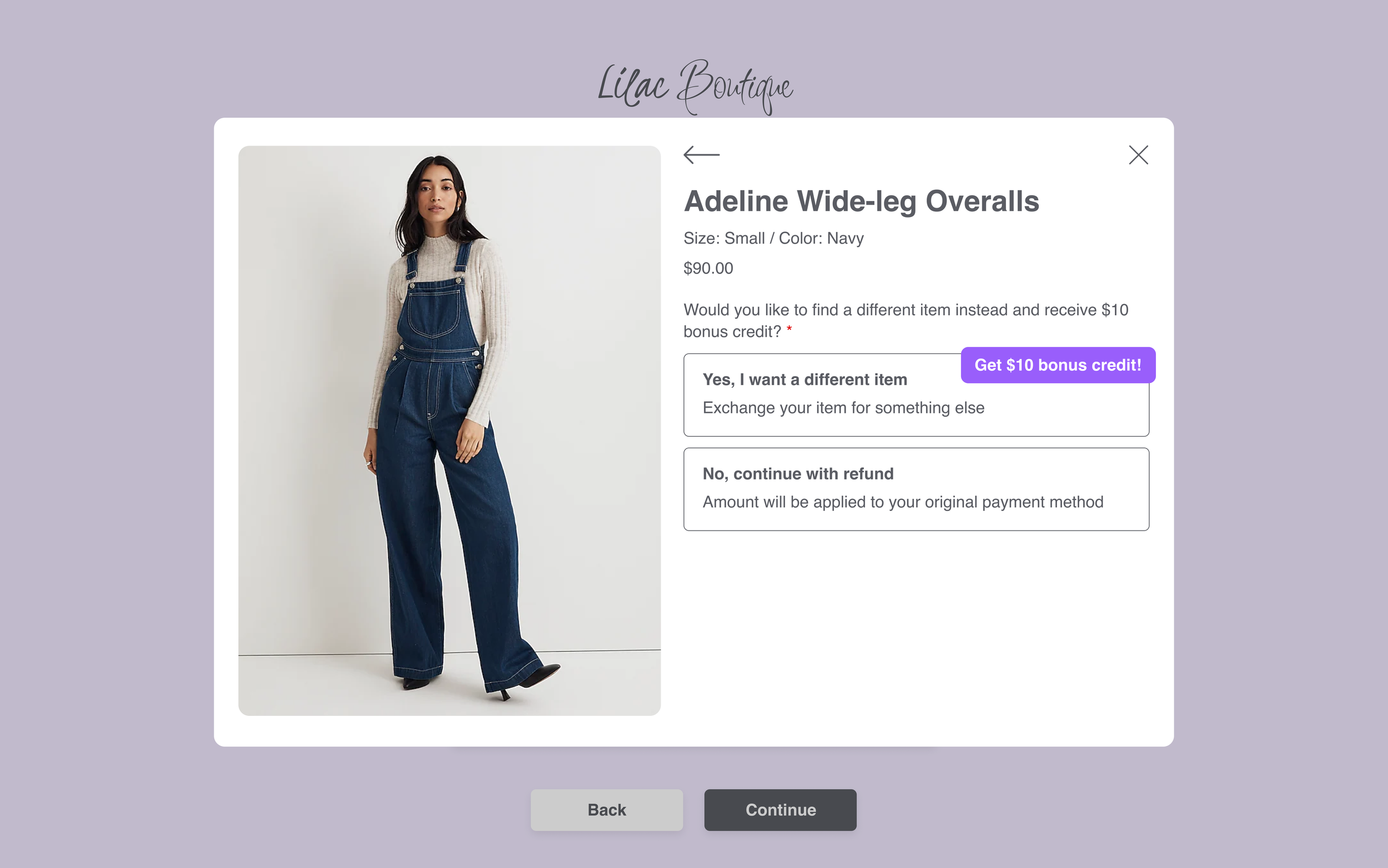

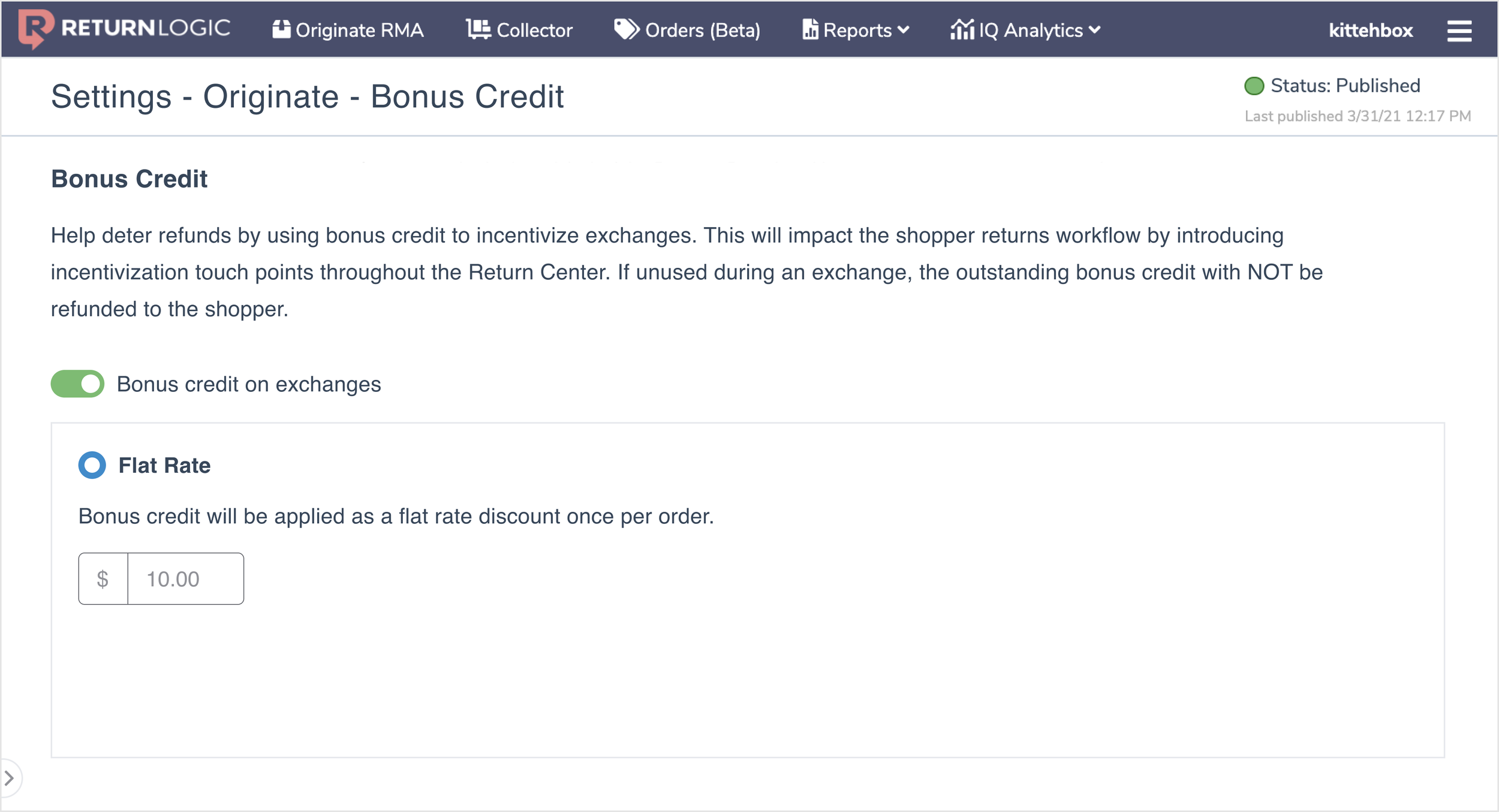
On the retailer-end, we have simple configurations to enable a flat rate bonus credit incentive.
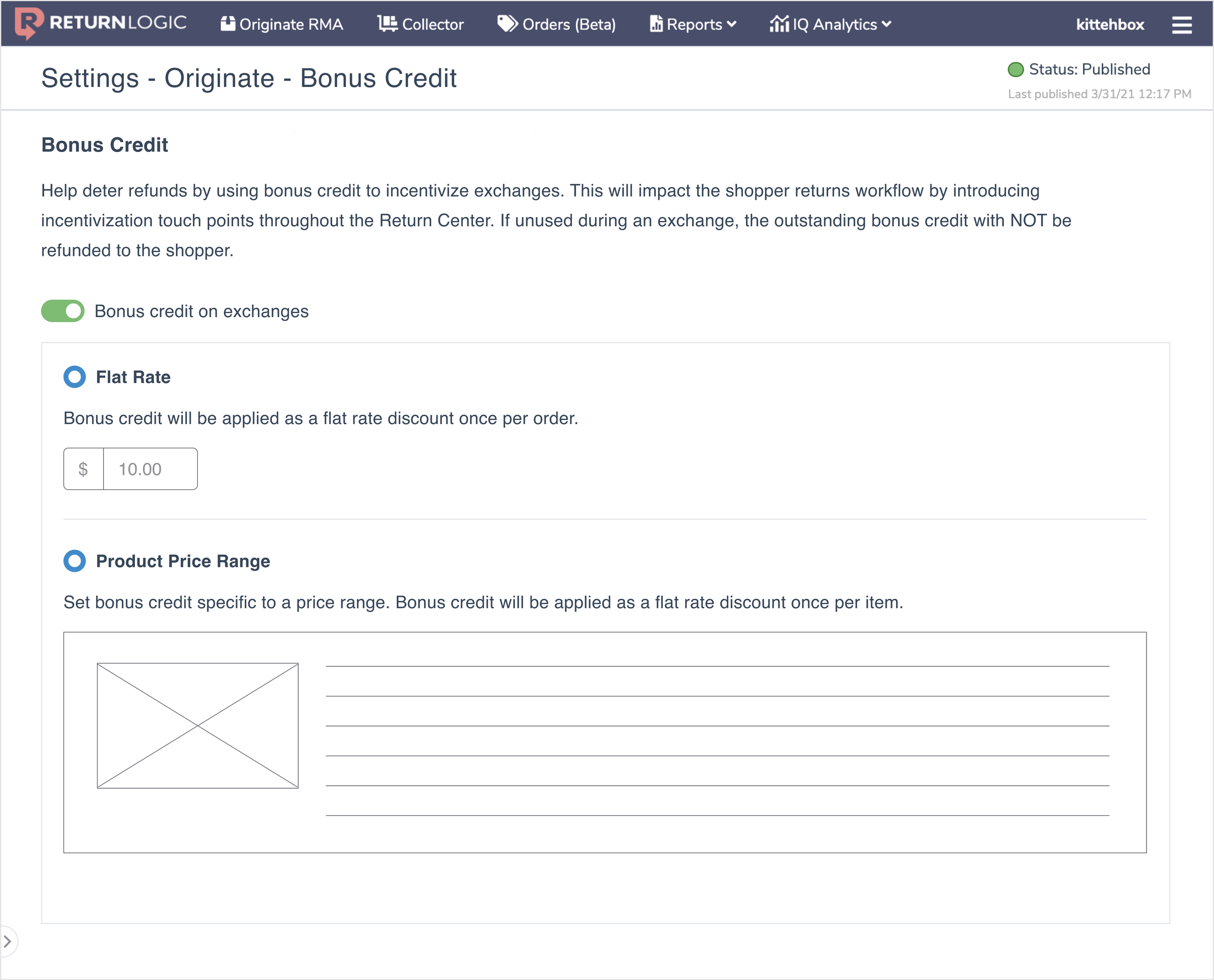
The next iteration will involve price range-based bonus credit to give retailers more flexibility. This direction came about from interview insights.
This project was done in tight collaboration with the core product trio including Abbey Wolfe (Senior Product Manager) and Austin Laudenslager (Lead Engineer), as well as the rest of the engineering team.
Some details of the UI shown may be different from actual implementation because I put together this case study almost a year after project launch.